Let’s be honest about something travel blogs never mention.
My knees pop when I stand up. My lower back has a 3-hour sitting limit before it starts sending me angry letters. I take a little white pill for blood pressure every morning. I wear compression socks on flights and I’m not even embarrassed about it anymore.
If you’re 45, 55, 65+ and your body has a few miles on it, you’ve probably thought this quiet thought:
Maybe my traveling days are behind me.
They’re not. They just need a different kind of planning. Not less travel — smarter travel.
I’ve learned this on ferries, on long drives, on cobblestones in Portugal and on a rainy trail in Tofino when my back said “we’re done” at kilometer two. I’m not a doctor. I’m just a 66-year-old who refused to stop going because my body got louder.
Here’s exactly how I keep moving.
1. The Knees: Stop Pretending You’re 30 on Cobblestones
My left knee is the boss of every itinerary now. I’ve learned to listen early, not when it’s screaming.
What actually works:
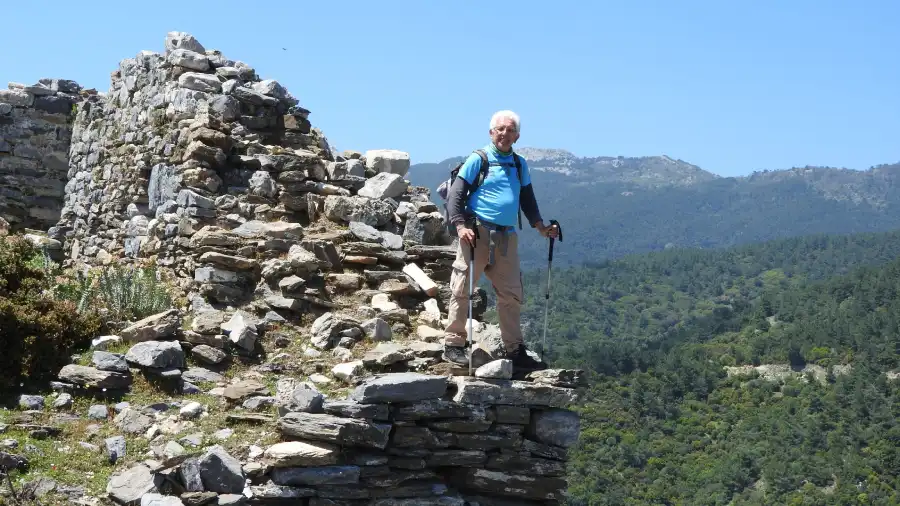
Poles. Every time. I used to think trekking poles were for “serious hikers.” They’re for smart people with knees. I use one collapsible pole even for city days. On trails, two. Black Diamond Distance Carbon Z poles fold down small enough for a daypack. They take 25% of the load off your knees going downhill. That’s not marketing, that’s math you feel.
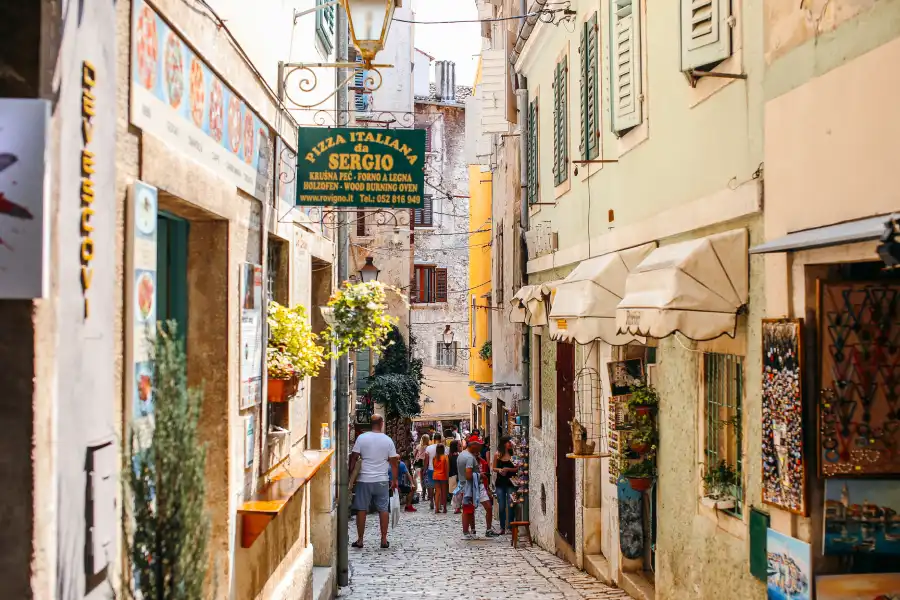
The 90-minute rule. No museum, no city walk, no standing in line longer than 90 minutes without a real sit-down. I put cafes in my Google Maps as rest stops, not food stops. In Obidos, I saw more because I sat more. I watched the town live instead of rushing past it.
Stairs are not a moral test. If there’s an elevator, I take it. If there’s a ramp, I take it. In Sintra, I paid the extra 4 euros for the tuk-tuk up to the Moorish Castle instead of the 250-step climb. I saw the same view, with knees that still worked the next day. That’s a win.
My knee kit: A soft knee sleeve from any drugstore, Voltaren gel (diclofenac) for evenings, and a small reusable ice pack I freeze at the hotel. Not sexy. Effective.
2. The Back: Your Seat Is Your Travel Plan
My back doesn’t care how beautiful the view is if the seat is wrong. A bad van seat or a cheap flight seat can ruin 3 days.
I learned this the hard way driving to Ucluelet. Three hours in a rental van, no lumbar support. I spent the first two days of that trip lying on the floor doing stretches.
What actually works:
You bring your back support with you. I carry a small, inflatable lumbar roll — $25 on Amazon, weighs nothing. In a van, on a plane, in a restaurant chair with zero support, it goes behind me. I also bring a small firm pillow for flights. I don’t care what it looks like.
Move before you have to. On flights over 2 hours, I get up every 45 minutes. Not 2 hours — 45 minutes. Walk to the bathroom, do 10 calf raises in the galley, stretch. I wear my compression socks on every flight over an hour. I used to think they were for other people. Then I saw what swelling really looked like after a long flight. Now they’re non-negotiable.
For blood pressure, long sitting is bad news. The socks, the walking, and water — not coffee — are part of my flight plan.
Book the right seat, not the cheap seat. Aisle seat, always. Near the back of the plane is often emptier and you can stand without bothering people. In a rental van or car, I adjust the seat so my knees are slightly below my hips. If the seat doesn’t do that, I put a folded towel under my thighs. 20 minutes of fiddling on day one saves your back for day seven.
3. The Blood Pressure: Boring Routines Keep You Free
This is the one no one wants to talk about. High blood pressure feels like nothing until it feels like everything.
I take my pill at the same time every morning, no matter what timezone I’m in. I set a daily alarm on my phone called “Pill & Water.” Not glamorous. It’s the reason I get to keep doing this.
What actually works:
Travel insurance that actually covers you. At our age, this is not optional. For Canadians, I use TuGo or World Nomads with the pre-existing condition rider — and I am brutally honest on the medical questionnaire. If you don’t declare your blood pressure meds and something happens, they can deny you. Declare everything. Pay the extra $40. Then forget about it and enjoy your trip.
I carry a one-page sheet in my daypack and on my phone: Medications, doses, doctor’s name, allergies, emergency contact, and a recent blood pressure reading. In Portugal, a pharmacist read that sheet and gave me exactly what I needed without a doctor visit.
Salt and water — the two levers you control. Restaurant food, especially in Portugal and Mexico, is salty. I don’t eat bland food on vacation. I just drink a lot more water than I think I need, and I don’t have a second glass of wine if I had chips with lunch. I also carry a small blood pressure monitor — the Omron wrist one, tiny, $60. Checking it once in the evening for 30 seconds tells me if I overdid it. Knowledge beats worry.
Know your numbers, not your fears. My doctor gave me a simple range: If my top number is over 180 or I have chest pain, headache that won’t quit, or vision changes, I go to urgent care. Period. No “I’ll wait and see.” Having a clear plan written down means I don’t catastrophize every little flutter.
4. The Hardest Part: How to Ask for Help Without Feeling Old
This is the real block. Not knees. Not blood pressure. Pride.
We spent 40 years being the helper. Being asked to carry someone’s bag feels… wrong.
I had to relearn this in Hoi An. My backpack was too heavy getting onto a boat. A young Vietnamese man just lifted it. I started to say “I got it.” He smiled and said “I know.”
I learned to say three phrases in any language:
“Could you help me for a moment, please?”
“Could I have a seat with a backrest?”
“Could you slow down just a little?”
In 95% of cases, people are not annoyed. They are relieved you asked clearly. Hotel staff would rather bring you a firm pillow than watch you sleep badly. Tour guides would rather slow down than watch you struggle silently.
You are not a burden. You are a traveler with a body that has lived. That’s most of us on that tour bus anyway.
The Truth No One Puts in the Brochure
Traveling now is not worse than traveling at 25. It’s more honest.
At 25, I ignored my body. At 65, I partner with it. I plan around it. And because I plan around it, I actually see more, not less.
I don’t hike 20km anymore. I hike 4 slow, beautiful kilometers with poles and come back in time for a long lunch where I can actually taste the food.
I don’t pull all-nighters in airports. I pay $30 more for the direct flight and an aisle seat and arrive as a human.
If your body has a few miles on it, you don’t need to stop traveling. You need a better kit, better shoes, and permission to do it your way.
Pack the poles. Pack the socks. Bring the little pillow.
And go anyway.
Your turn: What’s your one non-negotiable trick for traveling with a body that’s done a few laps around the sun? Share it below — let’s build a smarter packing list together for the rest of us.
Medical note:I’m not a medical professional. This is what works for me after talking with my own doctor. Please check with yours about travel, compression, and insurance — especially about flying with high blood pressure.
A guide to solo reinvention retreats — from a converted monastery in Québec City to vineyard stillness in Provence — for anyone ready to pause, reflect, and design what comes…
We treat new beginnings like they belong to youth. They don't. Here's why the beginnings you build yourself after 50 matter more than the ones you fell into.
At 25, van life is about escape. At 65, it's about return. Discover why your version — warmer, slower, with a real mattress — might just be the better one.