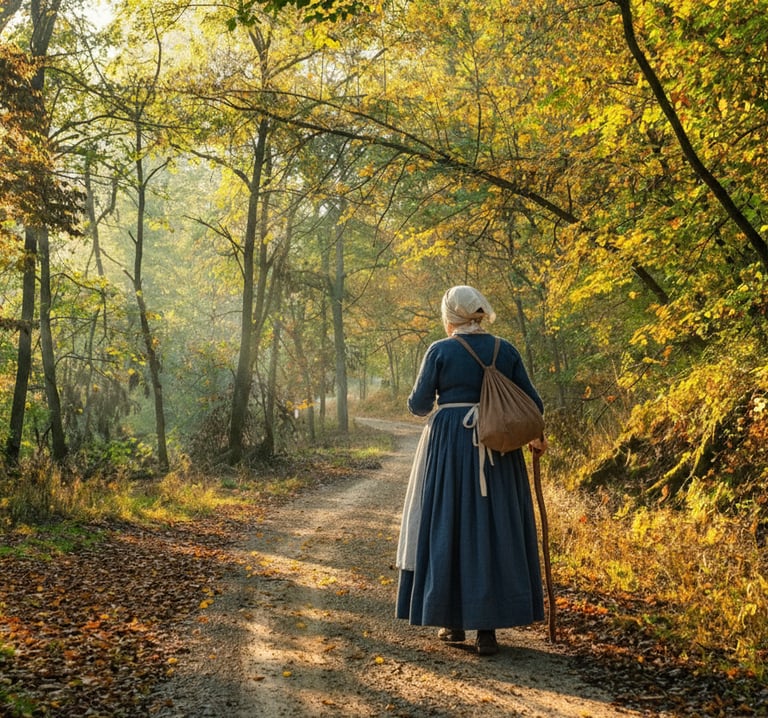
Mary Kelynack was 84 years old when she made a decision most people wouldn’t make at any age. She was going to London—not by carriage, not in comfort, but on foot. She had spent her life in Newlyn, Cornwall. A fishwife. A simple life. No wealth, no status. But in 1851, something stirred in her. She had heard about the Great Exhibition in London—a spectacle unlike anything the world had seen—and she wanted to witness it for herself. There was another reason too. She had been trying to claim a small pension without success, so she decided to take her case directly to London. And so she began.She walked over 300 miles, carrying a basket on her head, sleeping wherever she could, and relying on the kindness of strangers along the way.Five weeks later, she arrived. An 84-year-old woman, standing in London, having walked the entire distance from Cornwall.She stood before the Lord Mayor and said simply:
“I have come up asking for a small sum of money. I am 84.”Her journey did not go unnoticed. Her story spread. She received support, and even Prince Albert contributed to her cause. For a moment, she became known. But that’s not what matters. A reminder that life doesn’t wait for the perfect moment. That even at 84, there is still something worth moving toward. That sometimes, the journey itself is the proof that it was worth taking.She didn’t arrive with everything. She didn’t leave with wealth. But she left with something far greater.
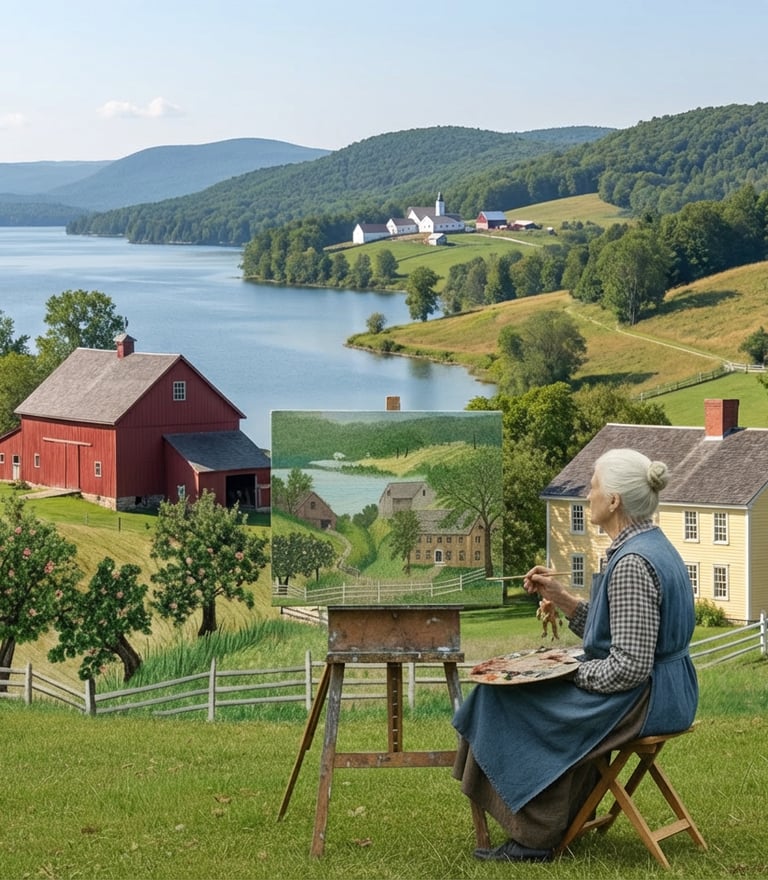
Anna Mary Robertson Moses—later known as Grandma Moses—didn’t begin her life as an artist. She spent her early years working hard, starting at just twelve years old as a housekeeper. Life was practical, demanding, and grounded in responsibility. She married, worked the land, raised a family, and carried both joy and loss. Ten children were born into her life, and only five lived beyond infancy. Like many of her time, she didn’t chase dreams—she lived what was in front of her. But something within her was always quietly observing. She noticed beauty in simple things. The rhythm of farm life. The changing seasons. The small, meaningful moments most people overlook.For years, that creativity found its way into embroidery. With needle and yarn, she stitched scenes of life as she saw it. It was her way of expressing something deeper—without needing recognition. Then life shifted. As she grew older, arthritis made it difficult to continue sewing. The one creative outlet she had relied on was no longer available. For many, that might have been the end of the story, For her, it was a turning point. In her late seventies, she picked up a paintbrush. There was no grand plan. No expectation of success. No thought of recognition. Just a simple decision to continue expressing what she felt. What emerged was something honest and deeply human. Her paintings weren’t about perfection. They were about memory, About feeling, About the quiet beauty of everyday life—snow falling on a small village, families preparing for gatherings, the soft green of a new season arriving. People connected with her work not because it was complex, but because it was real, by her eighties, the world began to notice. Her paintings were displayed, shared, and celebrated. She appeared on magazine covers, in documentaries, and across television screens. Her story spread far beyond the small town where she lived.
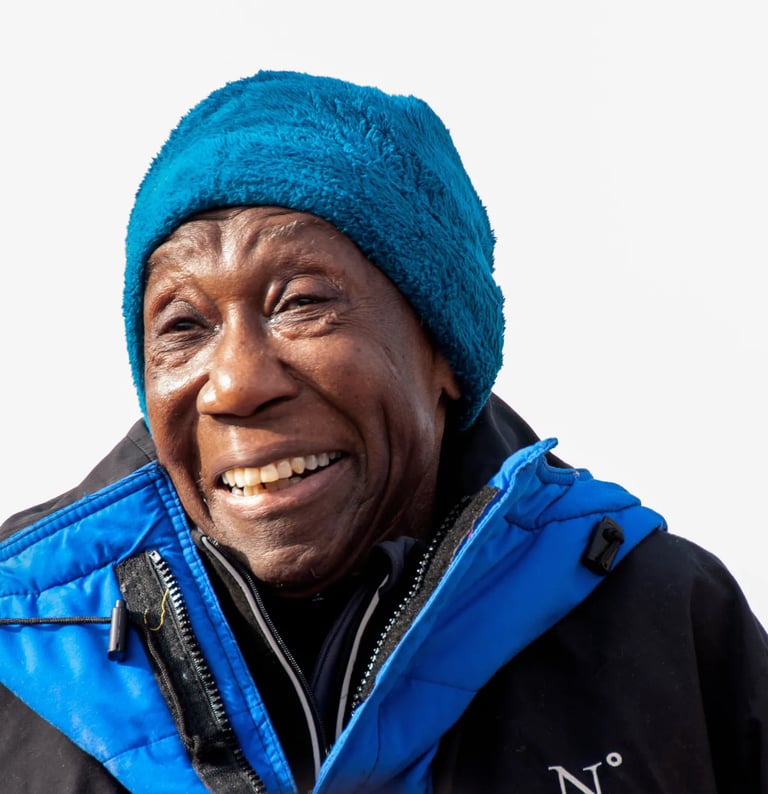
She Walked Where Few Ever Have Barbara Hillary didn’t live a small life.She was born in New York City in 1931, in a world that didn’t make things easy—especially for a woman, and especially for a Black woman with big dreams. But she didn’t let the world define what was possible for her. She chose her own path.She pursued education, earning both a bachelor’s and a master’s degree. She became a nurse, caring for others with compassion and strength. She built community, founding organizations and creating a magazine to give people a voice.But her story didn’t stop there. In her 20s, she faced breast cancer—and survived. In her 60s, she faced lung cancer—and survived again. Most people would have slowed down.
Most would have chosen comfort, safety… less. She chose something else. At 75 years old, Barbara Hillary stood at the North Pole. Not as a tourist. Not as a spectator.
But as an explorer—one of the few, and one of the first. Then, at 79… she did something even more extraordinary. She reached the South Pole. In that moment, she became the first African-American woman to stand at both ends of the Earth. Let that sink in, Not in her youth. Not when life was easy.
But after everything she had already lived through. Her life wasn’t about proving something to the world. It was about proving something to herself. After her journeys, she didn’t keep the experience to herself. She shared it. She spoke to others. She reminded people—especially women—that the limits they feel are often not real. That there is still more in them. Barbara Hillary passed away in 2019 at the age of 88. But her story doesn’t feel like an ending. It feels like a reminder. That strength doesn’t fade—it evolves.
That courage doesn’t belong to the young—it belongs to the willing.
And that the horizon doesn’t move further away with age… it becomes clearer. Maybe the life you’re meant to live isn’t behind you. Maybe it’s still waiting.
Inspiring Lives
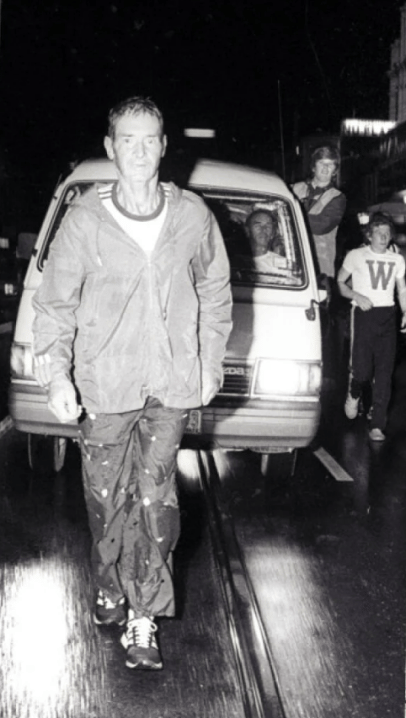
Most people thought he didn’t belong there. In 1983, some of the world’s best endurance runners gathered in Australia for a brutal race—573 miles from Sydney to Melbourne. It would take days to finish. Only the toughest, most trained athletes even attempted it. And then… he showed up. Cliff Young. A 61-year-old farmer.He wasn’t dressed like the others. No high-tech gear. No sleek running shoes. Just overalls and work boots, covered with galoshes. When he walked up to register, people laughed. They thought it was a joke. But Cliff wasn’t joking. He simply said, “I’d like to run.”So they gave him a number. At the starting line, the contrast was impossible to ignore. Elite athletes stood ready—lean, trained, focused. And beside them… Cliff. When the race began, the professionals took off with powerful, practiced strides. Cliff didn’t, He shuffled. Awkward. Slow. Unpolished. The crowd laughed. Some even shouted for him to get off the track. But Cliff didn’t stop. He just kept going. Here’s what no one expected. The race wasn’t just about speed. It was about endurance. The professional runners followed a strategy: run for long stretches, then stop to sleep. Cliff didn’t know that. So he didn’t stop. He just kept shuffling forward… through the night… through exhaustion… through everything. Five days later, at 1:25 in the morning…Cliff Young crossed the finish line. He didn’t just finish.He won. By nearly ten hours. At 61 years old, the man everyone laughed at had just set a new world record. When reporters asked how he did it, they expected some secret. A special diet. Advanced training. Something extraordinary. But there was no secret. He simply didn’t stop. And that’s what makes this story unforgettable. Cliff Young didn’t win because he was the strongest. He didn’t win because he was the fastest. He won because he kept going when others didn’t. No perfect form. No perfect plan. No need for approval. Just forward.There’s something in that… for all of us. You don’t have to look the part. You don’t have to start at the “right time.”You don’t have to move like everyone else.You just have to keep going.Even when it’s awkward. Even when it’s slow. Even when no one believes in you yet.Because the truth is…Most people don’t lose because they can’t do it. They lose because they stop. Maybe your path won’t look polished. Maybe it won’t make sense to others. Maybe you’ll feel like you’re behind. But none of that matters. What matters is this: Keep moving. Keep showing up. Keep going. Because in the end…t’s not about how you start.It’s about whether you finish.